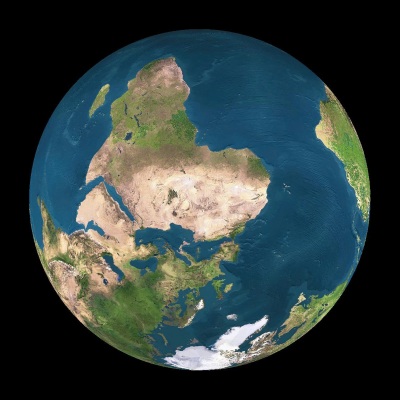
- and his mind reviews some of it for her, what little he was taught of the vast amount that true Civilization knows about cognitive science, and some of what he filled in at INT 29 around improved recollections; like a Zoomout Video showing dath ilan surrounded by its entire universe; only with meaningful content with implications in every piece of it, stars that are structured words instead of tiny dots of light in an illusion -
- macroanatomy and microanatomy of the brain, over a hundred cortical regions in two hemispheres and subsurface structures, vision here, spatial sense here, one kind of sensory integration and motor planning here, the mapping of the body's homunculus onto it; but that sensorimotor cortex interfaces with the cerebellum which does this kind of motor planning -
- microanatomy, the layers of the cortex, the different neurons making up the layers, how they mesh with each other, the signaling mesh produced by temporal synchronization of two already-synchronized cortical columns that recruit a third equidistant member; this is a cerebellar chip, detecting errors and correlating those errors against a hundred thousand inputs, a branching factor higher than exists anywhere else in the brain, yet still vastly reduced in dimension compared to all the incoming sensory data -
- differences between expected reward and actual reward; the equations for how much an error in either direction updates the neuron; if the errors can't be gotten down to zero, the neuron equilibrates, metastable if not stable, around the point where the error-nudges in both directions balance in their sum -
- circuits in subcortical structures that watch the larger world-model, binding emotions to them if they recognize the format; here's what Civilization knows about the way that those circuits wire up in childhood, the lesser ways they rewire in adulthood; the gene expression cascades underneath, the locally simple learning equations they implement; local gradient descent, temporal-difference learning, fire-together-wire-together -
- this is what a human brain really is, deep down, the real character of cognition as carried out inside mortals -
- and his thoughts start to zoom back upward from there through the levels of organization in intelligence, pointing out particular emotions and the subcortical structures they correspond to, what those emotions take as successes and errors, how mortal habits train themselves and balance around the point where subcortical error-nudges counterbalance each other, as they propagate through the whole brain - most of the local parts of cognition are usually in equilibrium, but there's always something being updated somewhere and so the brain's habits-in-sum are always moving...
...like a three-dimensional puzzle piece slotting into place, fitting together the mathematics of decision theory, what he's already taught her of computation and programming to build the magical-simulator-of-magic, calculus, equilibria, expected value, valid inference; combine it with what Civilization knows of the specifics of how brains compute things, and you can see the shape in the center, how that shape matches with all the surrounding areas of knowledge and binds to it, like a protein molecule slotting into its receptor...
...this is Thoughtcraft, much like Spellcraft, but with different laws of physics.
It's one fragment of Science.
There's kind of a lot of Science.
Past-Keltham didn't tell her because he didn't know how to teach all that and definitely not quickly - not knowing that Detect Thoughts at this level was possible - and it didn't seem kind to him, to say what sort of education dath ilani adults had, and that he couldn't realistically pass on in any reasonable time.
- and his mind reviews some of it for her, what little he was taught of the vast amount that true Civilization knows about cognitive science, and some of what he filled in at INT 29 around improved recollections; like a Zoomout Video showing dath ilan surrounded by its entire universe; only with meaningful content with implications in every piece of it, stars that are structured words instead of tiny dots of light in an illusion -
- macroanatomy and microanatomy of the brain, over a hundred cortical regions in two hemispheres and subsurface structures, vision here, spatial sense here, one kind of sensory integration and motor planning here, the mapping of the body's homunculus onto it; but that sensorimotor cortex interfaces with the cerebellum which does this kind of motor planning -
- microanatomy, the layers of the cortex, the different neurons making up the layers, how they mesh with each other, the signaling mesh produced by temporal synchronization of two already-synchronized cortical columns that recruit a third equidistant member; this is a cerebellar chip, detecting errors and correlating those errors against a hundred thousand inputs, a branching factor higher than exists anywhere else in the brain, yet still vastly reduced in dimension compared to all the incoming sensory data -
- differences between expected reward and actual reward; the equations for how much an error in either direction updates the neuron; if the errors can't be gotten down to zero, the neuron equilibrates, metastable if not stable, around the point where the error-nudges in both directions balance in their sum -
- circuits in subcortical structures that watch the larger world-model, binding emotions to them if they recognize the format; here's what Civilization knows about the way that those circuits wire up in childhood, the lesser ways they rewire in adulthood; the gene expression cascades underneath, the locally simple learning equations they implement; local gradient descent, temporal-difference learning, fire-together-wire-together -
- this is what a human brain really is, deep down, the real character of cognition as carried out inside mortals -
- and his thoughts start to zoom back upward from there through the levels of organization in intelligence, pointing out particular emotions and the subcortical structures they correspond to, what those emotions take as successes and errors, how mortal habits train themselves and balance around the point where subcortical error-nudges counterbalance each other, as they propagate through the whole brain - most of the local parts of cognition are usually in equilibrium, but there's always something being updated somewhere and so the brain's habits-in-sum are always moving...
...like a three-dimensional puzzle piece slotting into place, fitting together the mathematics of decision theory, what he's already taught her of computation and programming to build the magical-simulator-of-magic, calculus, equilibria, expected value, valid inference; combine it with what Civilization knows of the specifics of how brains compute things, and you can see the shape in the center, how that shape matches with all the surrounding areas of knowledge and binds to it, like a protein molecule slotting into its receptor...
...this is Thoughtcraft, much like Spellcraft, but with different laws of physics.
It's one fragment of Science.
There's kind of a lot of Science.
Past-Keltham didn't tell her because he didn't know how to teach all that and definitely not quickly - not knowing that Detect Thoughts at this level was possible - and it didn't seem kind to him, to say what sort of education adults had, and that he couldn't realistically pass on in any reasonable time.
- and his mind reviews some of it for her, what little he was taught of the vast amount that true Civilization knows about cognitive science, and some of what he filled in at INT 29 around improved recollections; like a Zoomout Video showing dath ilan surrounded by its entire universe; only with meaningful content with implications in every piece of it, stars that are structured words instead of tiny dots of light in an illusion -
- macroanatomy and microanatomy of the brain, over a hundred cortical regions in two hemispheres and subsurface structures, vision here, spatial sense here, one kind of sensory integration and motor planning here, the mapping of the body's homunculus onto it; but that sensorimotor cortex interfaces with the cerebellum which does this kind of motor planning -
- microanatomy, the layers of the cortex, the different neurons making up the layers, how they mesh with each other, the signaling mesh produced by temporal synchronization of two already-synchronized cortical columns that recruit a third equidistant member; this is a cerebellar chip, detecting errors and correlating those errors against a hundred thousand inputs, a branching factor higher than exists anywhere else in the brain, yet still vastly reduced in dimension compared to all the incoming sensory data -
- differences between expected reward and actual reward; the equations for how much an error in either direction updates the neuron; if the errors can't be gotten down to zero, the neuron equilibrates, metastable if not stable, around the point where the error-nudges in both directions balance in their sum -
- circuits in subcortical structures that watch the larger world-model, binding emotions to them if they recognize the format; here's what Civilization knows about the way that those circuits wire up in childhood, the lesser ways they rewire in adulthood; the gene expression cascades underneath, the locally simple learning equations they implement; local gradient descent, temporal-difference learning, fire-together-wire-together -
- this is what a human brain really is, deep down, the real character of cognition as carried out inside mortals -
- and his thoughts start to zoom back upward from there through the levels of organization in intelligence, pointing out particular emotions and the subcortical structures they correspond to, what those emotions take as successes and errors, how mortal habits train themselves and balance around the point where subcortical error-nudges counterbalance each other, as they propagate through the whole brain - most of the local parts of cognition are usually in equilibrium, but there's always something being updated somewhere and so the brain's habits-in-sum are always moving...
...like a three-dimensional puzzle piece slotting into place, fitting together the mathematics of decision theory, what he's already taught her of computation and programming to build the magical-simulator-of-magic, calculus, equilibria, expected value, valid inference; combine it with what Civilization knows of the specifics of how brains compute things, and you can see the shape in the center, how that shape matches with all the surrounding areas of knowledge and binds to it, like a protein molecule slotting into its receptor...
...this is Thoughtcraft, much like Spellcraft, but with different laws of physics.
It's one fragment of Science.
There's kind of a lot of Science.
Past-Keltham didn't tell her because he didn't know how to teach all that and definitely not quickly - not knowing that Detect Thoughts at this level was possible - and it didn't seem kind to him, to say what sort of education adults had, that he couldn't realistically pass on in any reasonable time.
- and his mind reviews some of it for her, what little he was taught of the vast amount that true Civilization knows about cognitive science, and some of what he filled in at INT 29 around improved recollections; like a Zoomout Video showing dath ilan surrounded by its entire universe; only with meaningful content with implications in every piece of it, stars that are structured words instead of tiny dots of light in an illusion -
- macroanatomy and microanatomy of the brain, over a hundred cortical regions in two hemispheres and subsurface structures, vision here, spatial sense here, one kind of sensory integration and motor planning here, the mapping of the body's homunculus onto it; but that sensorimotor cortex interfaces with the cerebellum which does this kind of motor planning -
- microanatomy, the layers of the cortex, the different neurons making up the layers, how they mesh with each other, the signaling mesh produced by temporal synchronization of two already-synchronized cortical columns that recruit a third equidistant member; this is a cerebellar chip, detecting errors and correlating those errors against a hundred thousand inputs, a branching factor higher than exists anywhere else in the brain, yet still vastly reduced in dimension compared to all the incoming sensory data -
- differences between expected reward and actual reward; the equations for how much an error in either direction updates the neuron; if the errors can't be gotten down to zero, the neuron equilibrates, metastable if not stable, around the point where the error-nudges in both directions balance in their sum -
- circuits in subcortical structures that watch the larger world-model, binding emotions to them if they recognize the format; here's what Civilization taught him about the way that those circuits wire up in childhood, the lesser ways they rewire in adulthood; the gene expression cascades underneath, the locally simple learning equations they implement; local gradient descent, temporal-difference learning, fire-together-wire-together -
- this is what a human brain really is, deep down, the real character of cognition as carried out inside mortals -
- and his thoughts start to zoom back upward from there through the levels of organization in intelligence, pointing out particular emotions and the subcortical structures they correspond to, what those emotions take as successes and errors, how mortal habits train themselves and balance around the point where subcortical error-nudges counterbalance each other, as they propagate through the whole brain - most of the local parts of cognition are usually in equilibrium, but there's always something being updated somewhere and so the brain's habits-in-sum are always moving...
...like a three-dimensional puzzle piece slotting into place, fitting together the mathematics of decision theory, what he's already taught her of computation and programming to build the magical-simulator-of-magic, calculus, equilibria, expected value, valid inference; combine it with what Civilization knows of the specifics of how brains compute things, and you can see the shape in the center, how that shape matches with all the surrounding areas of knowledge and binds to it, like a protein molecule slotting into its receptor...
...this is Thoughtcraft, much like Spellcraft, but with different laws of physics.
It's one fragment of Science.
There's kind of a lot of Science.
Past-Keltham didn't tell her because he didn't know how to teach all that and definitely not quickly - not knowing that Detect Thoughts was possible or that it could reach this level - and it didn't seem kind to him, to say what sort of education adults had, that he couldn't realistically pass on in any reasonable time.