Edit History (Oldest to Newest)
Version: 1
Fields Changed (Original)
Updated
Content

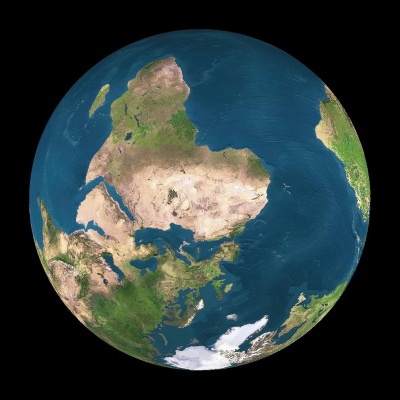
This is dath ilan, and from Earth's perspective, the very different social forms seem very uniform across their whole planet.  The term "monoculture" springs to mind, if you are an Earthling.

An average dath ilani might protest in reply that, from their own perspective, all of Earth's governments make weirdly similar mistakes.  This average dath ilani might (after learning more of Earth's culture) give the example of an American tourist who thinks that India has a monoculture, in that they all have weird food and the people all speak Foreign.  Earthlings seem diverse to Earthlings, the dath ilani would claim, and dath ilani seem diverse to dath ilani.

A smarter dath ilani would concede the point after ten minutes of reading Wikipedia.  Dath ilani are in nearly uniform agreement that too much uniformity is bad, and that individual diversity needs to be protected.  This is more agreement than you could get out of Earth people on the physical shape of their planet.

How did this cultural uniformity come about, in dath ilan's hidden history?  Isabella suspected a great deal of genocide, and there was in fact some of that, though not as much as Isabella was thinking.  The doctrine of that early Adam-Smith-Martin-Luther religion made it technically sinful to go around declaring war on other countries.  That didn't stop the Empire any more than it would have stopped Catholics or Jews; their priests, too, had skill with technicalities.  The Imperators at the time tended to find some other plausible-sounding reason to set up a trade center just outside a barbarian state, full of tempting goods and fat-looking merchants just begging to be robbed.  When the inevitable happened, the Empire would descend in all righteous retaliation and exterminate the barbarian nobility, with their priesthood's full blessing.

The Empire made some effort to preserve the lives of barbarian civilians, but no effort to preserve barbarian cultures.  For it was the doctrine of their state religion and elite philosophers that individual people had life and worth, and groups did not.  (The priesthood that Adam-Smith-Martin-Luther had rebelled against had said quite the opposite.)

In time there was an Empire that had only a single great rival left, in the Pharoahdom of the American continents.  And if you were an Earthling you might expect that would not end well.  But the Empire had their Adam-Smith-Martin-Luther and a voluntarist ideology, and the Pharoahdom's mandarins were descended from nobles that had long bred themselves with mathematicians.  Both States had already become wealthy enough to experiment with rich-country features like democracy or having a conscience.  Each State had imitated successful aspects of the other.  There was some of the grand rivalry you might have expected; but for reasons that historical anecdotes would only give an illusion of explaining, the Empire and Pharaohdom were already far beyond mercantilism in their understanding of economics.  For those same strange reasons, the citizens channeled their patriotic rivalry into offering easier business licenses and competing to host more of the international economy.  Trade agreements were signed, borders opened, citizens exchanged and intermarried, essays published about possible voting systems, and in time an agreement was signed that merged Empire and Pharoahdom into a new democracy that called itself Civilization.

The last holdouts against Civilization were agricultural tribes scattered across the far South Americas and New Zealand.  By then Civilization had grown enough of a conscience that those cultures were left in place.  The voters of Civilization insisted on sending in occasional armored missionaries, to advertise that technology existed, for the sake of offering those children a choice.  There were dath ilani who agonized about how few children did take that choice, in those remaining cultures where math was never studied.  But it was argued that there was also a danger in uniformity, in taking choices away; and it was not as if the fate of all human beings was not the same, in the end.

Then cryonics was invented, and that was the end.  The arithmetic of Civilization's moral calculations changed drastically; it was said that any mistake could be made up to someone in time, but for the mistake of letting their brain be destroyed.  Scrupulous people agonized over the choice but they could not suggest a better one.  So the missionaries of Civilization took up tasers, and imposed enough presence on the tribes to make sure they collected the souls of every corpse.  Inevitably the children became curious, the impressively invincible outsiders told the truth as they saw it and offered options to individuals, and soon there was no culture anywhere in dath ilan except the one that called itself Civilization.

And all of that is just another meaningless historical anecdote.  It doesn't explain why dath ilan is more of a monoculture than India or the United States, which also have central governments.

Version: 2
Fields Changed Content
Updated
Content

This is dath ilan, and from Earth's perspective, the very different social forms seem very uniform across their whole planet.  The term "monoculture" springs to mind, if you are an Earthling.

An average dath ilani might protest in reply that, from their own perspective, all of Earth's governments make weirdly similar mistakes.  This average dath ilani might (after learning more of Earth's culture) give the example of an American tourist who thinks that India has a monoculture, in that they all have weird food and the people all speak Foreign.  Earthlings seem diverse to Earthlings, the dath ilani would claim, and dath ilani seem diverse to dath ilani.

A smarter dath ilani would concede the point after ten minutes of reading Wikipedia.  Dath ilani are in nearly uniform agreement that too much uniformity is bad, and that individual diversity needs to be protected.  This is more agreement than you could get out of Earth people on the physical shape of their planet.

How did this cultural uniformity come about, in dath ilan's hidden history?  Isabella suspected a great deal of genocide, and there was in fact some of that, though not as much as Isabella was thinking.  The doctrine of that early Adam-Smith-Martin-Luther religion made it technically sinful to go around declaring war on other countries.  That didn't stop the Empire any more than it would have stopped Catholics or Jews; their priests, too, had skill with technicalities.  The Imperators at the time tended to find some other plausible-sounding reason to set up a trade center just outside a barbarian state, full of tempting goods and fat-looking merchants just begging to be robbed.  When the inevitable happened, the Empire would descend in all righteous retaliation and exterminate the barbarian nobility, with their priesthood's full blessing.

The Empire made some effort to preserve the lives of barbarian civilians, but no effort to preserve barbarian cultures.  For it was the doctrine of their state religion and elite philosophers that individual people had life and worth, and groups did not.  (The priesthood that Adam-Smith-Martin-Luther had rebelled against had said quite the opposite.)

In time there was an Empire that had only a single great rival left, in the Pharoahdom of the American continents.  And if you were an Earthling you might expect that would not end well.  But the Empire had their Adam-Smith-Martin-Luther and a voluntarist ideology, and the Pharoahdom's mandarins were descended from nobles that had long bred themselves with mathematicians.  Both States had already become wealthy enough to experiment with rich-country features like democracy or having a conscience.  Each State had imitated successful aspects of the other.  There was some of the grand rivalry you might have expected; but for reasons that historical anecdotes would only give an illusion of explaining, the Empire and Pharaohdom were already far beyond mercantilism in their understanding of economics.  For those same strange reasons, the citizens channeled their patriotic rivalry into offering easier business licenses and competing to host more of the international economy.  Trade agreements were signed, borders opened, citizens exchanged and intermarried, essays published about possible voting systems, and in time an agreement was signed that merged Empire and Pharoahdom into a new democracy that called itself Civilization.

The last holdouts against Civilization were agricultural tribes scattered across the far South Americas and New Zealand.  By then Civilization had grown enough of a conscience that those cultures were left in place.  The voters of Civilization insisted on sending in occasional armored missionaries, to advertise that technology existed, for the sake of offering those children a choice.  There were dath ilani who agonized about how few children did take that choice, in those remaining cultures where math was never studied.  But it was argued that there was also a danger in uniformity, in taking choices away; and it was not as if the fate of all human beings was not the same, in the end.

Then cryonics was invented, and that was the end.  The arithmetic of Civilization's moral calculations changed drastically; it was said that any mistake could be made up to someone in time, but for the mistake of letting their brain be destroyed.  Scrupulous people agonized over the choice but they could not suggest a better one.  So the missionaries of Civilization took up tasers, and imposed enough presence on the tribes to make sure they collected the souls of every corpse, whenever their time came.  Inevitably the children became curious, the impressively invincible outsiders told the truth as they saw it and offered options to individuals, and soon there was no culture anywhere in dath ilan except the one that called itself Civilization.

And all of that is just another meaningless historical anecdote.  It doesn't explain why dath ilan is more of a monoculture than India or the United States, which also have central governments.

Version: 3
Fields Changed Content
Updated
Content

This is dath ilan, and from Earth's perspective, the very different social forms seem very uniform across their whole planet.  The term "monoculture" springs to mind, if you are an Earthling.

An average dath ilani might protest in reply that, from their own perspective, all of Earth's governments make weirdly similar mistakes.  This average dath ilani might (after learning more of Earth's culture) give the example of an American tourist who thinks that India has a monoculture, in that they all have weird food and the people all speak Foreign.  Earthlings seem diverse to Earthlings, the dath ilani would claim, and dath ilani seem diverse to dath ilani.

A smarter dath ilani would concede the point after ten minutes of reading Wikipedia.  Dath ilani are in nearly uniform agreement that too much uniformity is bad, and that individual diversity needs to be protected.  This is more agreement than you could get out of Earth people on the physical shape of their planet.

How did this cultural uniformity come about, in dath ilan's hidden history?  Isabella suspected a great deal of genocide, and there was in fact some of that, though not as much as Isabella was thinking.  The doctrine of that early Adam-Smith-Martin-Luther religion made it technically sinful to go around declaring war on other countries.  That didn't stop the Empire any more than it would have stopped Catholics or Jews; their priests, too, had skill with technicalities.  The Imperators at the time tended to find some other plausible-sounding reason to set up a trade center just outside a barbarian state, full of tempting goods and fat-looking merchants just begging to be robbed.  When the inevitable happened, the Empire would descend in all righteous retaliation and exterminate the barbarian nobility, with their priesthood's full blessing.

The Empire made some effort to preserve the lives of barbarian civilians, but no effort to preserve barbarian cultures.  For it was the doctrine of their state religion and elite philosophers that individual people had life and worth, and groups did not.  (The priesthood that Adam-Smith-Martin-Luther had rebelled against had said quite the opposite.)

In time there was an Empire that had only a single great rival left, in the Pharoahdom of the American continents.  And if you were an Earthling you might expect that would not end well.  But the Empire had their Adam-Smith-Martin-Luther and a voluntarist ideology, and the Pharoahdom's mandarins were descended from nobles that had long bred themselves with mathematicians.  Both States had already become wealthy enough to experiment with rich-country features like democracy or having a conscience.  Each State had imitated successful aspects of the other.  There was some of the grand rivalry you might have expected; but for reasons that historical anecdotes would only give an illusion of explaining, the Empire and Pharaohdom were already far beyond mercantilism in their understanding of economics.  For those same strange reasons, the citizens channeled their patriotic rivalry into offering easier business licenses and competing to host more of the international economy.  Trade agreements were signed, borders opened, citizens exchanged and intermarried, essays published about possible voting systems, and in time an agreement was signed that merged Empire and Pharoahdom into a new democracy that called itself Civilization.

The last holdouts against Civilization were agricultural tribes scattered across the far South Americas and New Zealand.  By then Civilization had grown enough of a conscience that those cultures were left in place.  The voters of Civilization insisted on sending in occasional armored missionaries, to advertise that technology existed, for the sake of offering their children the choice.  There were dath ilani who agonized about how few children did take that choice, in those remaining cultures where math was never studied.  But it was argued that there was also a danger in uniformity, in taking choices away; and it was not as if the fate of all human beings was not the same, in the end.

Then cryonics was invented, and that was the end.  The arithmetic of Civilization's moral calculations changed drastically; it was said that any mistake could be made up to someone in time, but for the mistake of letting their brain be destroyed.  Scrupulous people agonized over the choice but they could not suggest a better one.  So the missionaries of Civilization took up tasers, and imposed enough presence on the tribes to make sure they collected the souls of every corpse, whenever their time came.  Inevitably the children became curious, the impressively invincible outsiders told the truth as they saw it and offered options to individuals, and soon there was no culture anywhere in dath ilan except the one that called itself Civilization.

And all of that is just another meaningless historical anecdote.  It doesn't explain why dath ilan is more of a monoculture than India or the United States, which also have central governments.

Version: 4
Fields Changed Content
Updated
Content

This is dath ilan, and from Earth's perspective, the very different social forms seem very uniform across their whole planet.  The term "monoculture" springs to mind, if you are an Earthling.

An average dath ilani might protest in reply that, from their own perspective, all of Earth's governments make weirdly similar mistakes.  This average dath ilani might (after learning more of Earth's culture) give the example of an American tourist who thinks that India has a monoculture, in that they all have weird food and the people all speak Foreign.  Earthlings seem diverse to Earthlings, the dath ilani would claim, and dath ilani seem diverse to dath ilani.

A smarter dath ilani would concede the point after ten minutes of reading Wikipedia.  Dath ilani are in nearly uniform agreement that too much uniformity is bad, and that individual diversity needs to be protected.  This is more agreement than you could get out of Earth people on the physical shape of their planet.

How did this cultural uniformity come about, in dath ilan's hidden history?  Isabella suspected a great deal of genocide, and there was in fact some of that, though not as much as Isabella was thinking.  The doctrine of that early Adam-Smith-Martin-Luther religion made it technically sinful to go around declaring war on other countries.  That didn't stop the Empire any more than it would have stopped Catholics or Jews; their priests, too, had skill with technicalities.  The Imperators at the time tended to find some other plausible-sounding reason to set up a trade center just outside a barbarian state, full of tempting goods and fat-looking merchants just begging to be robbed.  When the inevitable happened, the Empire would descend in all righteous retaliation and exterminate the barbarian nobility, with their priesthood's full blessing.

The Empire made some effort to preserve the lives of barbarian civilians, but no effort to preserve barbarian cultures.  For it was the doctrine of their state religion and elite philosophers that individual people had life and worth, and groups did not.  (The priesthood that Adam-Smith-Martin-Luther had rebelled against had said quite the opposite.)

In time there was an Empire that had only a single great rival left, in the Pharoahdom of the American continents.  And if you were an Earthling you might expect that would not end well.  But the Empire had their Adam-Smith-Martin-Luther and a voluntarist ideology, and the Pharoahdom's mandarins were descended from nobles that had long bred themselves with mathematicians.  Both States had already become wealthy enough to experiment with rich-country features like democracy or having a conscience.  Each State had imitated successful aspects of the other.  There was some of the grand rivalry you might have expected; but for reasons that historical anecdotes would only give an illusion of explaining, the Empire and Pharaohdom were already far beyond mercantilism in their understanding of economics.  For those same strange reasons, the citizens channeled their patriotic rivalry into offering easier business licenses and competing to host more of the international economy.  Trade agreements were signed, borders opened, citizens exchanged and intermarried, essays published about possible voting systems, and in time an agreement was signed that merged Empire and Pharoahdom into a new democracy that called itself Civilization.

The last holdouts against Civilization were agricultural tribes scattered across the far South Americas and New Zealand.  By then Civilization had grown enough of a conscience that those cultures were left in place.  Those who elected to leave entirely were given all the gifts of civilization; those who stayed did not have strange things forced into their presence by way of gifts offered to their neighbors.  The voters of Civilization insisted on sending in occasional armored missionaries, to advertise that technology existed, for the sake of offering their children the choice.  There were dath ilani who agonized about how few children did take that choice, in those remaining cultures where math was never studied.  But it was argued that there was also a danger in uniformity, in taking choices away; and it was not as if the fate of all human beings was not the same, in the end.

Then cryonics was invented, and that was the end.  The arithmetic of Civilization's moral calculations changed drastically; it was said that any mistake could be made up to someone in time, but for the mistake of letting their brain be destroyed.  Scrupulous people agonized over the choice but they could not suggest a better one.  So the missionaries of Civilization took up tasers, and imposed enough presence on the tribes to make sure they collected the souls of every corpse, whenever their time came.  Inevitably the children became curious, the impressively invincible outsiders told the truth as they saw it and offered options to individuals, and soon there was no culture anywhere in dath ilan except the one that called itself Civilization.

And all of that is just another meaningless historical anecdote.  It doesn't explain why dath ilan is more of a monoculture than India or the United States, which also have central governments.